Small groups, big attention
Three or four players is the sweet spot for household games: turns come around fast, one table seats everybody, and nobody coasts in the back row. The catch is odd numbers, since three breaks most team formats. Half the games below are free-for-all or simultaneous, and all of them run on paper, tape, cups, socks, or a balloon.
Games for three players
Every pick here works with an odd headcount, no referee required.
- Odd One Out — Nothing to gather, nothing to set up, three players, indoors or out in any spot. Fine once kids know the hand signs. All three throw rock-paper-scissors together; two matching hands and one different means the odd player scores. All alike or all different, throw again. Play to five, for example.
- Category Sprint — Three players each need paper and a pencil; setup runs about a minute, and a table indoors or a shaded one outside is enough. Best for confident writers. Agree on a letter and three categories, then everyone writes one answer per category at the same time. Answers nobody else wrote earn a point.
- Portrait Guess — Paper and markers, three players, quick setup, tabletop space indoors. Any pencil-holder can play, regardless of drawing skill. Each person secretly sketches one of the other two. Reveal the drawings one at a time and let the player who wasn't drawn guess the subject. Bad drawings make it better.
- Paper Tower Stand-Off — Indoors at one table, three players get equal piles of scrap paper and a strip of tape; sorting takes a few minutes typically. Suits kids who can fold and balance. Build a free-standing tower before a counted limit, then measure with a ruler. Tear rather than cut, since scissors need adult supervision.
- Balloon Triangle — One balloon, three players, no setup, and enough clear floor indoors or calm air outside. Good for kids who need to move. Tap it up together and count aloud; a floor touch restarts the count. Supervise closely: popped balloon pieces are a choking hazard, and lamps should be out of reach.
- Flick Zone — Tape scoring zones on a table, fold paper into discs, and three seated players are ready in a couple of minutes indoors. Steady fingers beat strength here. Flick from the table edge, equal turns each, highest total wins. Keep the small discs away from toddlers.
Games for four players
Four splits into two pairs, which opens up team play without a scorekeeper.
- Table Soccer, Two on Two — A folded paper ball, two pencil goals, four players at one table indoors, setup in a minute or two. Anyone with a light touch can join. Teammates alternate flicks, one finger per touch, defending their own end. Play to an agreed score, three goals as a starting point. No hard shots near faces.
- Silent Partner Charades — Four players in two pairs, paper slips and a pencil, a few minutes of writing, standing room indoors. Works once players can read slips or take a whispered prompt. One acts while the partner guesses, then they swap. Mime in place: no running, climbing, or lifting people.
- Back-to-Back Drawing — Two chairs per pair, paper, pencils, and hand-drawn shape cards; four players, almost no setup, indoors. Calm enough for winding down. One partner describes a hidden card while the other draws it unseen. Compare the result, then trade roles.
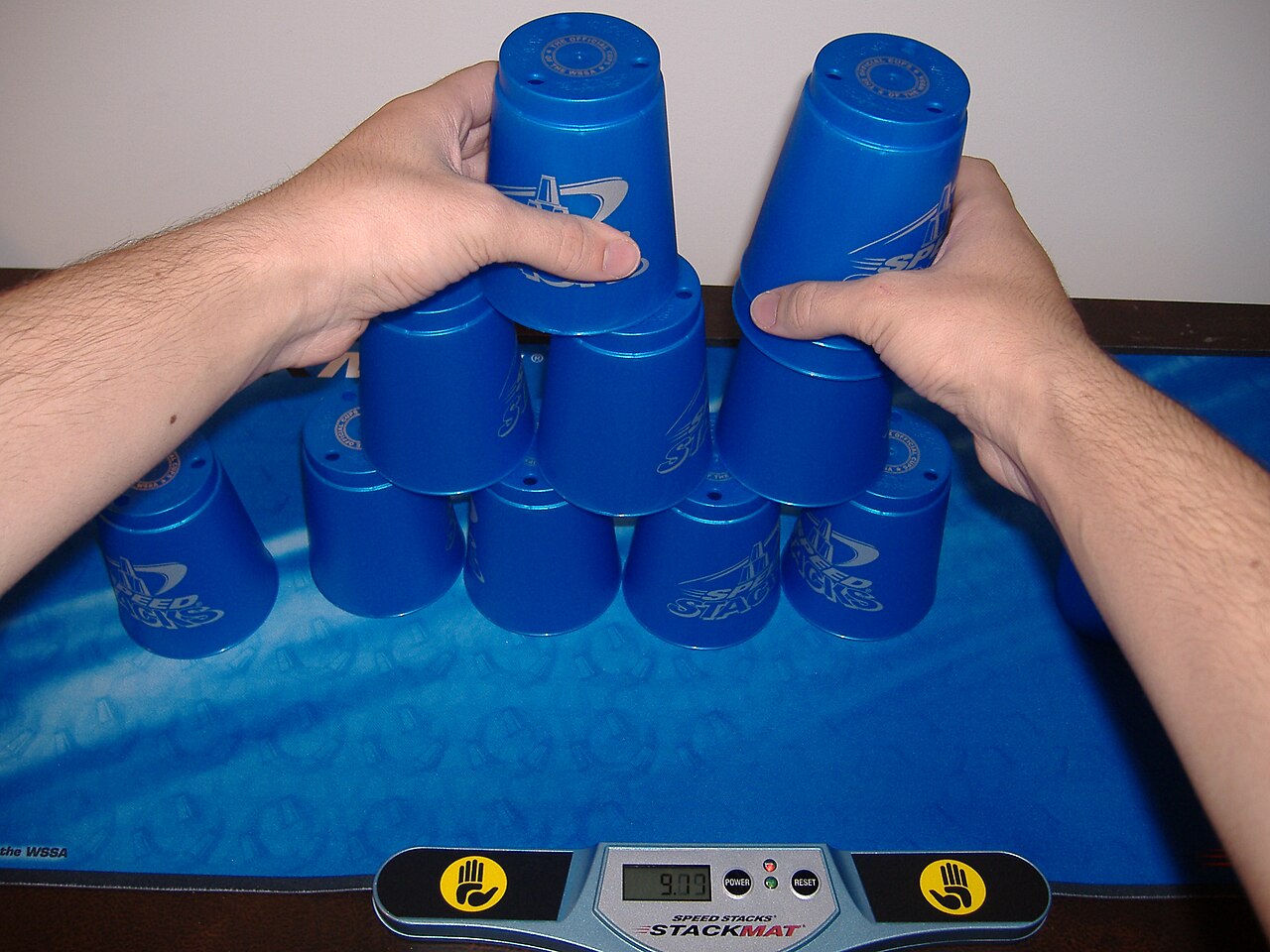
- Cup Pyramid Relay — Paper cups, a table for each pair, four players indoors, no real setup. Good for restless hands. Teammates alternate placing one cup per turn until the pyramid stands, then take it down the same way. First pair finished wins. Build at table height, and walk instead of running.
- Higher or Lower Duel — Four players in two pairs, paper and pencils, under a minute of setup, seated anywhere indoors. Needs comfort comparing numbers. Each team hides a number inside an agreed range, 1 to 50 for example, then teams alternate guesses at the rival number and hear only “higher” or “lower.”
- Sock Bowling — Roll a sock into a ball, stand empty plastic bottles as pins, and four players have a hallway or patio game in a few minutes. Simple enough for early counters. Each player rolls twice per frame and counts knock-downs. Socks slide on tile, so wear grippy shoes and walk to fetch the ball.
Keeping everyone in every round
Simultaneous games such as Odd One Out, Category Sprint, and Balloon Triangle solve the waiting problem outright: everyone acts on the same beat. Turn-based games need one rule stated up front, that a round ends only when every player has had the same number of goes, so the last seat isn't shortchanged.
With three, give the odd player a job that still scores: caller in Higher or Lower, timekeeper in Paper Tower, guesser in Portrait Guess. Rotate it each round. If someone drifts away mid-game, the two-player games pick up from there.
Adapting bigger games down
Most games built for five to eight players shrink cleanly. Turn teams into pairs, cut the number of rounds rather than the rules, and drop roles that need a crowd, especially elimination formats that leave one person watching. Shrink the play area too, because a hallway or a single table beats a whole yard when only four people are moving. If your headcount climbs past eight, switch formats instead of stretching these; the 9–15 player games handle that size better.