A solo game has to replace the opponent, so give it a clock, a target, or a record to beat. These twelve use paper, socks, cups, and cards, and split between quiet desk play and moving around.
What makes a good solo game
- A number to beat. Seconds, steps, floors, or flips — something you can write down and compare tomorrow.
- A real ending. Ten throws or a cleared board tells you when to stop.
- Honest solo rules. No hidden information you'd have to pretend not to know.
- A difficulty dial. Move the line back, add pairs, or shorten the timer.
- Quiet or active, chosen on purpose. Desk games suit waiting rooms; skill games suit restless afternoons.
When someone joins you, switch to two-player games or games for three or four.
Paper and pencil solo games
One player, indoors, at a table. A sheet, a pencil, and a timer; setup is typically under a minute.
- Word Ladder. Pick two four-letter words, such as COLD and WARM. Change one letter per line, every step a real word. Your score is the step count; try to shave one off next time. Suits confident spellers.
- Speed Grid. Rule a 6-by-10 grid, for example, then write 1 through 60 in order against a timer. The record is what you chase. Start in a different corner to keep it honest. Best for fluent number-writers.
- Make the Target. Fold nine scraps numbered 1–9, draw four, and use each once with any operations to reach a target you set first — 24 is a typical starting point. Score a point per solved draw. Needs comfortable multiplication.
- Thirty Circles. Draw thirty circles, then turn each into a different recognizable object. Score is how many you fill before repeating an idea. No reading needed, so pre-readers can play with pictures.
Solo skill challenges
One player, active, indoors or out. Clear a floor patch roughly six feet square, as a starting point.
- Sock Toss Ladder. Roll socks into balls and tape three throw lines at increasing distances — three, six, and nine feet, for example — facing a laundry basket. Ten throws, more points from farther back. Walk to fetch; don't run on hard floors.
- Balloon Keep-Up. Count consecutive taps before the balloon touches down; one hand only raises the difficulty. Supervise young children closely, since popped balloon pieces are a choking hazard, and play away from stairs.
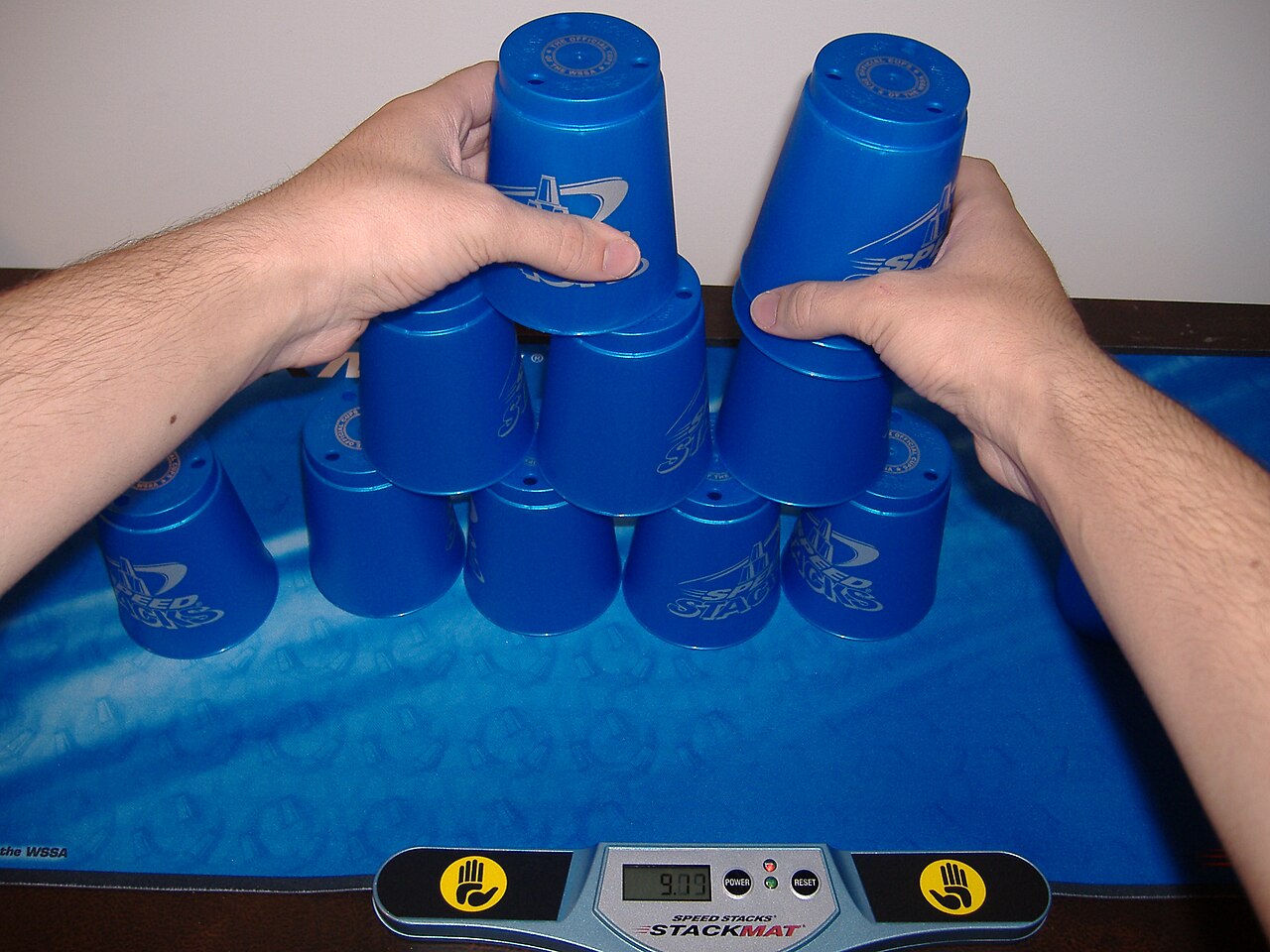
- Cup Pyramid Sprint. Build ten plastic cups into a pyramid, then collapse them into one stack, timed. Chase your own seconds. Use a level floor and light cups, never glass.
- Tape Line Balance. Walk a masking-tape line heel-to-toe with a book on your head and count steps before it drops. For steady walkers: bare feet, dry floor, and check that the tape hasn't peeled.
Solo games with household items
One player, seated. Setup typically takes a couple of minutes and clears away just as fast.
- Card Tower. Build the tallest freestanding tower from a deck of cards and count floors rather than inches. Leaning it on a wall doesn't count. Rewards a steady hand and patience.
- Solo Memory. Lay pairs face down — eight pairs is a reasonable starting point — flip two at a time, and count total flips until the board clears. Fewer flips wins. Draw your own picture pairs for pre-readers.
- Button Sort Sprint. Tip a jar of mixed buttons into a muffin tin, sorting by color against a timer, then by number of holes for a harder round. Buttons are a choking hazard; supervise small children and count them back into the jar.
- Two-Cup Water Puzzle. Using unmarked three-cup and five-cup containers, leave exactly four cups in the larger one. Count pours and try to use fewer. Work at the sink or outdoors and wipe spills immediately; wet floors get slippery.
Keeping solo play interesting
Post a record sheet somewhere visible — fridge, whiteboard, notebook — with the date, the game, and the score. Beating a number you can see works better than remembering one.
- Change one variable at a time: distance, hand, timer, or number of pieces.
- Run a short season, a week for example, then reset records so a slump doesn't stick.
- Keep three games in rotation instead of twelve; the novelty comes from rules you tweak.
- Log near-misses. 'Tower fell at floor nine' is a better target than 'failed.'
- Anchor play to a routine — ten minutes after dinner, for example, beats waiting for motivation.
- Raise the ceiling when a record falls twice in a row, so the game keeps asking something of you.