
Home Trivia Night
A full quiz evening with question rounds, team answer sheets and a homemade scoreboard.
- Players
- 4–16 in teams
- Ages
- All ages
- Setting
- Indoors
- Setup
- More than 15 minutes
Team building works when the game forces people to talk, plan and rely on each other – not when it forces them to perform. These activities emphasize cooperation, communication and shared problem-solving, sized for small work teams through to whole-group events, and none of them need a hired facilitator.

How many players?
What are you planning?
Game type
Where will you play?
Who will be playing?
Setup time
14 games match your picks
A full quiz evening with question rounds, team answer sheets and a homemade scoreboard.

A timed course of cushions, tape lines, crawls and targets built from what the room or garden offers.
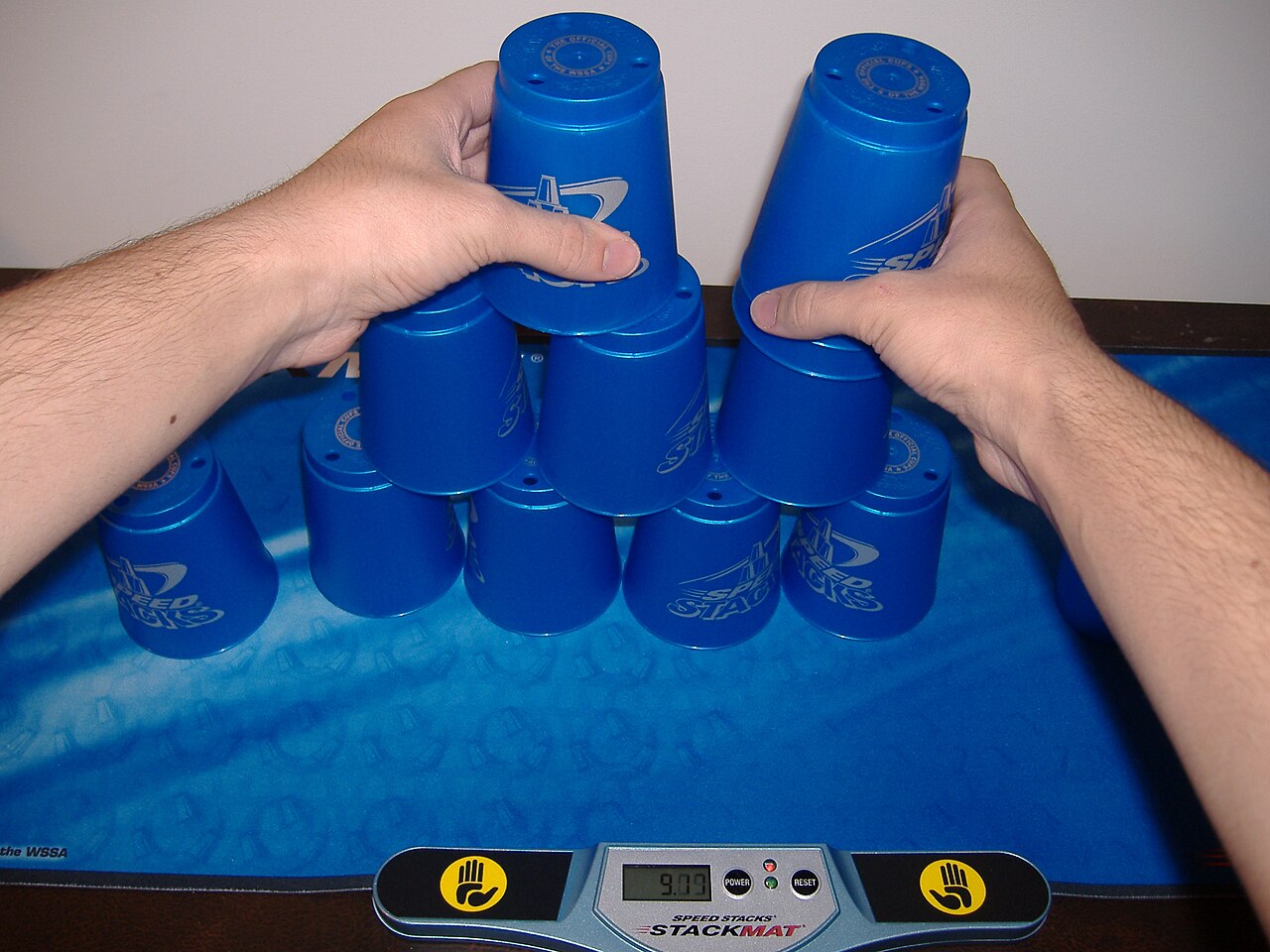
Build and collapse cup pyramids against a sixty-second clock.
Teams race to find or photograph every item on a homemade list before time runs out.
Guide a blindfolded partner through a scattered-object minefield using only your voice.
Move marshmallows or cotton balls between bowls using chopsticks — first to empty their bowl wins.
A venue-wide hunt scaled for big events — teams tick off finds, photos and small challenges.
Balance a ball or egg on a spoon and race to the finish without dropping it.
Bingo where each square is a person’s trait — find someone who has a pet, speaks two languages…
Teams race to find or photograph every item on a homemade list before time runs out.
Guide a blindfolded partner through a scattered-object minefield using only your voice.
Grab two hands across the circle and untangle into a ring without letting go.
Teams build the tallest free-standing tower from paper and tape in ten minutes.
Decide what the session is for. New groups need communication and name-learning; established teams get more from problem-solving under light pressure. Cooperative goals land better than pitting colleagues against each other when the point is trust.
Check the practical envelope: team size, whether people can move freely, how much time you have and whether anyone should sit out for mobility or comfort reasons. Activities where every role matters – spotters, planners, runners – include more people than single-star formats.